
From Steam Engines to Smart Grids: How Singtronic is Redistributing Social Entertainment Energy
Okay, let’s cut straight to the chase. If you’re a B2B distributor or importer in the pro-audio and entertainment space, you’re stuck in the middle of a massive shift. On one side, you’ve got your warehouse shelves (or catalog) filled with what we’ll call the “Traditional Karaoke Machines” – the all-in-one console units, the DVD/CD+G players, the amp-and-mixer combos paired with bulky speaker boxes. On the other side, sales reps are pitching you this new category: the Singtronic Karaoke System. It’s not an incremental upgrade. It’s a fundamentally different model, and choosing which horse to back requires understanding it as a shift in infrastructure, not just features.
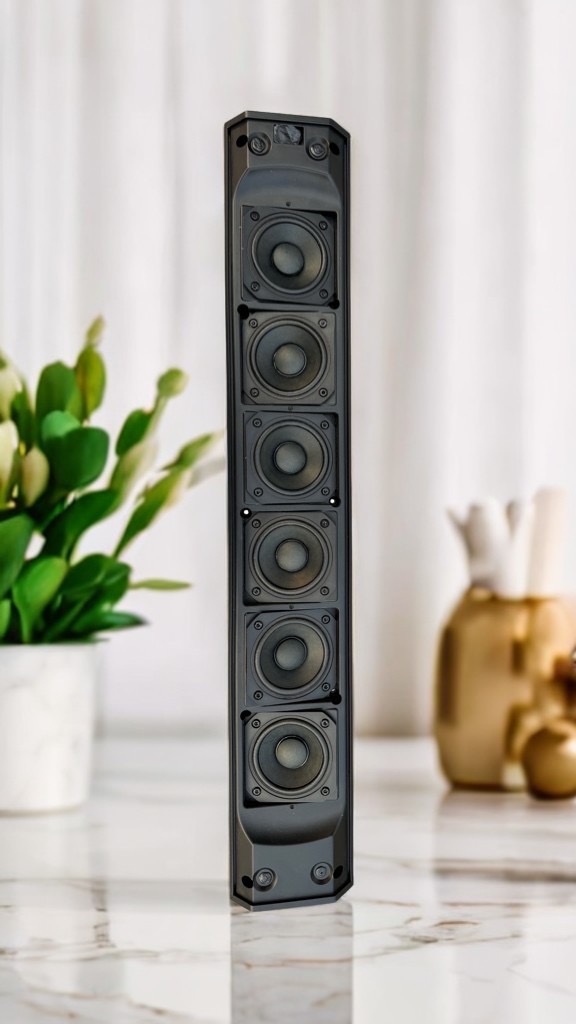
The core difference is physical vs. platform. Traditional karaoke is hardware-centric. You’re essentially selling a closed appliance. Its value is fixed at the factory: a disc drive, a pre-loaded set of songs (maybe a few thousand), built-in amplification, and often integrated speakers. The business model is simple, one-and-done. You sell the unit, maybe some spare microphones or laser discs, and the transaction is largely complete. The end-user’s experience is limited to what’s in the box. Updates? Non-existent. New songs? Buy a new disc pack, if you can find them. For you as a dealer, this means your revenue is tied directly to unit volume and replacement cycles. The 2024 wholesale data shows a steady but declining segment here, still holding about 35% of global B2B volume, primarily in price-sensitive and low-digital-penetration markets. The margins are often squeezed thin, competing on bulk.
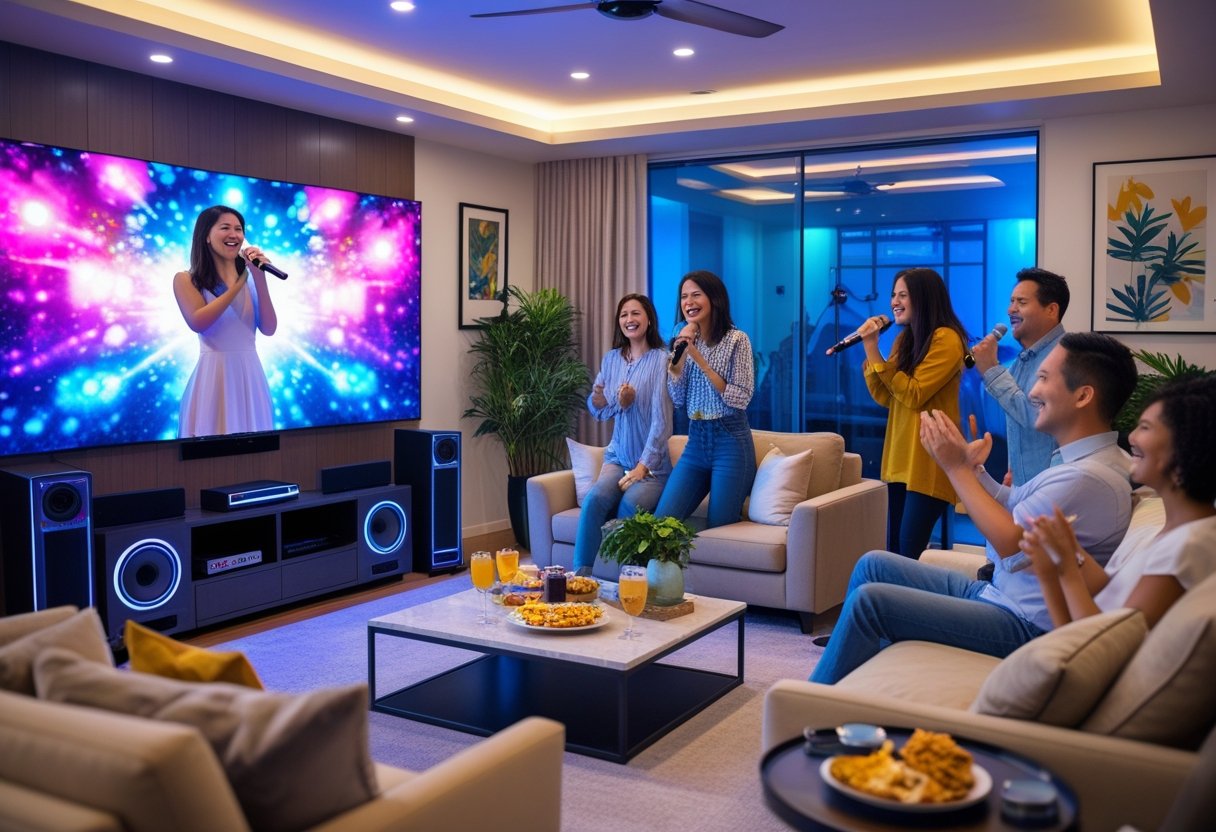
Enter the Singtronic Karaoke System. This isn’t just a machine; it’s a connected entertainment node. The hardware—often a streamlined main unit, professional-grade wireless mics, and scalable, separate speaker systems—is just the delivery mechanism. The real product is the software and the content ecosystem. It connects via Wi-Fi or Ethernet to a cloud-based library that doesn’t have 3,000 songs; it has 300,000+, and it’s growing weekly without the user or you needing to ship a single physical item. This changes your business from selling boxes to enabling a service. The initial hardware sale has a healthier margin (industry averages suggest 22-28% higher than traditional unit wholesale), but the backend potential lies in SaaS-like recurring models—think subscription plans for premium song libraries, commercial licenses for hospitality venues, or paid feature unlocks (like advanced voice effects or video recording). For a distributor, this creates sticky customer relationships and predictable reorder revenue, moving beyond the transactional.
Let’s talk specs and real-time operation, because that’s where the rubber meets the road for your B2B clients (the bars, hotels, family entertainment centers). A traditional machine in a bar faces constant friction. The catalog is stale. Finding songs involves flipping through massive, tattered binders. The sound is often a generic “echo-heavy” preset. Breakdowns mean entire system replacement or specialist repair for disc drives. Now, stack up the Singtronic operational data: song searches happen via tablet, phone, or on-screen with real-time keyboard input. The cloud library updates automatically, featuring global Top 40 charts literally the week they release—a major selling point for venues targeting younger crowds. Sound calibration is often AI-driven, adjusting EQ and feedback suppression per room. Crucially, the system health can be monitored remotely. You, as the dealer, can potentially offer proactive maintenance contracts. Downtime, the killer of venue revenue, plummets.
Here’s a snapshot of the key B2B distribution and operational considerations:
| Feature Aspect | Traditional Karaoke Machine | Singtronic Karaoke System |
|---|---|---|
| Content Delivery | Physical Media (DVD/CD), Limited Internal Storage | Cloud-Based Streaming, Subscription Model |
| Song Library Size | Fixed, 1,000 – 5,000 songs typical | Dynamic, 100,000 – 500,000+, constantly updated |
| Update Process | Manual, purchase new disc sets | Automatic, over-the-air (OTA) updates |
| B2B Revenue Model | Primarily hardware margin, one-time sale | Higher hardware margin + recurring service/subscription revenue |
| Venue Operation | Manual book management, prone to errors/damage | Digital search via multiple devices, queue management |
| Maintenance & Support | Hardware-centric, often third-party | Remote diagnostics, potential for dealer-managed service plans |
| 2024 Global B2B Trend | Stable in emerging markets, declining in mature markets | High growth (>40% YoY) in commercial and high-end residential markets |
| Customization for Venues | Low, maybe logo on startup screen | High, branded interfaces, curated playlists, pricing controls |
The market is bifurcating. Traditional machines still have a defined lane: extremely cost-conscious consumers, areas with poor internet stability, and niches where “simplicity” is the only requirement. But for the commercial sector—the sector that drives higher volume orders and repeat business for distributors—the Singtronic approach is becoming the default specification. A bar owner isn’t just buying a karaoke night; they’re buying a tool to increase dwell time, drink sales, and customer loyalty. A modern system provides that data: most popular songs, peak hours, singer engagement metrics. This is value you can upsell.
The supply chain and inventory implications are massive too. With traditional systems, you’re forecasting demand for physical media and specific models, dealing with obsolescence. With a Singtronic-type system, your core hardware SKUs are fewer and more future-proof. Your “inventory” becomes the activation codes, the subscription plans, and the expertise you provide in installation and networking. Your role evolves from box-mover to solution provider. The conversation with your buyer shifts from “This unit has a 10-inch woofer” to “This system will keep your content fresh and your customers engaged while providing you a modern management dashboard.”
Professional Q&A for B2B Decision-Makers
Q: The initial investment for a Singtronic system is higher for our clients. How do we justify the price against a cheaper traditional machine?
A: Move the conversation from upfront cost to Total Cost of Ownership (TCO) and revenue generation. A traditional machine has a low entry but high “hidden” costs: recurring purchases of new song discs, frequent repairs on mechanical drives, and the opportunity cost of offering a stale experience that doesn’t attract crowds. A Singtronic system has a known, fixed software cost (subscription) and proven reliability. For a venue, even one extra night of packed crowds per month due to a better experience pays for the entire system. Provide them with a simple TCO calculator spreadsheet.
Q: How reliant is this on stable, high-speed internet? What do we tell clients in areas with poor connectivity?
A: This is a critical technical point. Most modern systems, including Singtronic, have sophisticated caching capabilities. The core library index and frequently used songs can be stored locally on the device. While real-time updates and full access to millions of songs require internet, the system can operate robustly on intermittent or slower connections once initial caching is done. For truly offline environments, traditional machines or specific OEM models with large pre-loaded SSD drives remain the only option. We recommend a site assessment before specifying the system.
Q: As a distributor, what kind of support and training do we need to provide?
A: The support model shifts. Your team needs basic networking/IP configuration skills, not just audio wiring. Training should focus on teaching your clients (the venues) how to use the management backend—how to add songs, manage queues, set up pricing, and interpret simple data dashboards. The good news is that the manufacturer (us) typically provides extensive dealer portal resources, webinars, and direct tech support for you, enabling you to build a high-margin, value-added service layer rather than just handling returns.
