
Karaoke PA vs Traditional Audio: Which System Wins for Bars, Restaurants, and Event Spaces?
Let’s cut straight to the point. If you’re a B2B dealer sourcing audio equipment for commercial clients, you’re not just selling speakers and amplifiers. You’re selling solutions for customer engagement, atmosphere, and revenue generation. The choice between a dedicated Karaoke PA System and a Traditional Audio System isn’t about which is better in a vacuum—it’s about which tool solves the specific problem your client has. We’re breaking this down with real-time commercial applications and specs that matter in 2023-2024.
Core Application Differences: Entertainment Engine vs. Background Ambiance

A traditional audio system, like those used in upscale lounges, retail stores, or conference halls, is designed for fidelity and even coverage. Its job is to deliver clear, balanced sound—music, announcements, background ambiance—across a wide area. The priority is consistency and clarity, often with a subtle, non-intrusive presence. Think of a high-end restaurant where the music sets a mood but never interferes with conversation.
A professional Karaoke PA System, in contrast, is an entertainment engine. It’s built for forward, focused, and robust vocal projection. Its primary mission is to make amateur singers sound confident and engaged, which requires handling high-volume, dynamic vocal inputs without distortion or feedback. This makes it the go-to for karaoke bars, family entertainment centers, private event rooms, and even community halls hosting interactive events. The market trend, especially in Asia-Pacific and growing in the West, shows a surge in “experiential hospitality,” where venues use karaoke as a value-added service to increase dwell time and beverage sales. A standard audio system simply can’t handle the peak vocal loads and microphone sensitivity without specialized processing.
Technical Breakdown: Where the Hardware Diverges
Here’s where specs get practical. The differences aren’t just marketing; they’re in the circuitry and component design.
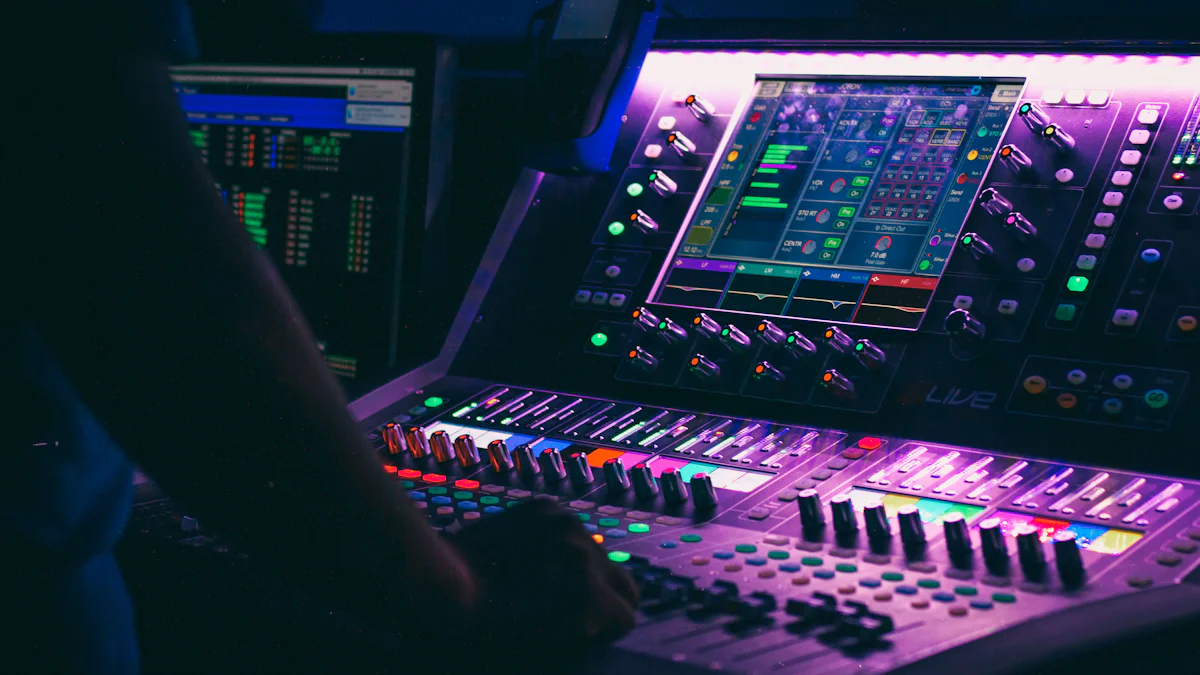
- Mixer & Processing: A traditional system mixer might have basic EQ. A Karaoke PA mixer has dedicated, sophisticated feedback suppressors, vocal effects (echo, reverb, pitch correction), and often multiple priority ducking channels. This “ducking” feature automatically lowers music volume when someone sings—a non-negotiable for smooth karaoke sessions.
- Microphones & Inputs: Karaoke systems prioritize mic inputs. They use professional-grade UHF wireless microphones with robust anti-interference circuits, crucial for a clutter-filled venue. Traditional systems might have a single mic input for announcements, not built for multiple, simultaneous high-gain vocal inputs.
- Amplifiers & Speakers: Karaoke speakers are built with drivers designed to handle the mid-range frequencies of the human voice clearly and loudly, often with larger horns. They prioritize sensitivity (dB SPL) over ultra-wide frequency response. Traditional hi-fi speakers aim for a flat, full-range response for music reproduction. Karaoke amplifiers also have higher headroom on the mic channels to prevent clipping when a singer belts out a high note.
Comparative Analysis Table (2024 Industry Benchmarks)
| Feature | Professional Karaoke PA System | Traditional Commercial Audio System |
|---|---|---|
| Primary Use Case | Interactive Vocal Performance (Karaoke, Live Singing) | Music Playback, Background Ambiance, Announcements |
| Core Tech Focus | Vocal Clarity, Feedback Control, Dynamic Effects | Full-Range Fidelity, Even Spatial Coverage, Networkability |
| Key Processor | Digital Feedback Suppressor, Multi-Band Vocal EQ, Effects DSP | Room Correction DSP, Multi-Zone Amplification DSP |
| Mic Input Priority | High: 2-4+ dedicated channels with priority ducking | Low: Often 1-2 channels, no automatic ducking |
| Typical Speaker Design | High-Sensitivity Woofer + Compression Horn (e.g., 100dB @ 1W/1m) | Broad Dispersion Woofer + Tweeter (Wider, smoother response) |
| Amplifier Headroom | High on Mic Channels (to handle sudden vocal peaks) | Consistent across all channels |
| Ideal Client/Venue | Karaoke Bars, Family Entertainment Centers, Event Spaces with Singing | Restaurants, Retail Stores, Hotels (Lobbies), Corporate Offices |
| 2023-24 Growth Driver | Experiential Entertainment, Social Media-Worthy Experiences | Background Atmos for Premium Spaces, Integrated AV for Smart Venues |
Investment & ROI: Thinking Beyond the Hardware Price Tag
For your B2B clients, the decision is an investment calculation. A traditional audio system is an operational cost—necessary for ambiance. A Karaoke PA System is a direct revenue driver. Data from hospitality operators shows that venues offering karaoke can see a 20-40% increase in weekday beverage sales and longer customer retention times. The system itself can be monetized through private room rentals, hourly charges, or song request fees.
However, the operational context is key. A hybrid model is emerging as a smart play. Many modern commercial integrators are installing systems with a Karaoke PA as the core for the stage or entertainment zone, integrated with a broader traditional system for ambient areas (like seating zones or bathrooms). This allows for zoned control—background music in dining areas, powerful karaoke in the bar—all from a single managed platform. Sourcing from a manufacturer that offers both product lines and integration support is a significant advantage for dealers, allowing for flexible, future-proof proposals.
Installation & Durability: The Dealer’s On-Site Reality
Karaoke PA systems take more abuse. Microphones get dropped, speakers run at peak levels for hours, and mixers face constant adjustment. For dealers, this means installation must account for robust cable management (especially for wireless mic receivers), equipment placement out of casual reach but within operator access, and ventilation for amplifiers running at high load. The components are generally built with heavier-duty materials—steel grilles on speakers, metal chassis on mixers. A traditional system installed in a café might be set-and-forget; a karaoke system requires an initial user training session for staff on basic feedback prevention and effect adjustment, a value-added service dealers can provide.
Professional Q&A for B2B Dealers
Q1: My client wants to add karaoke nights to their existing restaurant audio system. Can we just add a few microphones and a mixer?
A: This is the most common pitfall. Standard commercial amplifiers and speakers are not designed for the gain before feedback required for karaoke. You’ll likely introduce chronic feedback, poor vocal clarity, and risk damaging speakers not voiced for such a concentrated mid-range load. The cost-effective and professional solution is to install a dedicated, powered Karaoke PA speaker/mixer combo for the performance area, using the existing system only for background music in other zones.
Q2: Are wireless microphones in Karaoke PA systems reliable for commercial use?
A: Modern professional UHF wireless systems are highly reliable, but specification is critical. For commercial use, avoid VHF or cheap 2.4GHz systems. Look for true-diversity UHF systems (650-960MHz) with adjustable frequency groups to avoid TV and wireless interference. Systems with metal-bodied microphones and license-free operation across major markets (like the 863-865MHz band in the EU and UK) are essential for B2B shipments.
Q3: What’s the key spec to look for in a Karaoke PA speaker to avoid distortion with loud singers?
A: Focus on Maximum SPL and Power Handling (RMS, not Peak). For a mid-sized room, you want a speaker that can deliver at least 125 dB SPL maximum and a continuous RMS power of 500W-1000W. A high sensitivity rating (over 98 dB) also means it gets louder with less amplifier power. This headroom is what prevents the harsh, blown-out sound when an enthusiastic singer gets too close to the mic.
Q4: How are modern Karaoke PA systems adapting to digital content and streaming?
A: The integration of Bluetooth, WiFi, and app control is now standard in mid-to-high tier systems. This allows singers to use streaming karaoke apps (like Yokee, Singa) from their phones directly into the system. For dealers, this means the hardware is future-proofed against physical media (CDs, DVDs) decline. Sourcing systems with multi-platform connectivity (iOS/Android) and dedicated control apps for venue staff is a major selling point.
